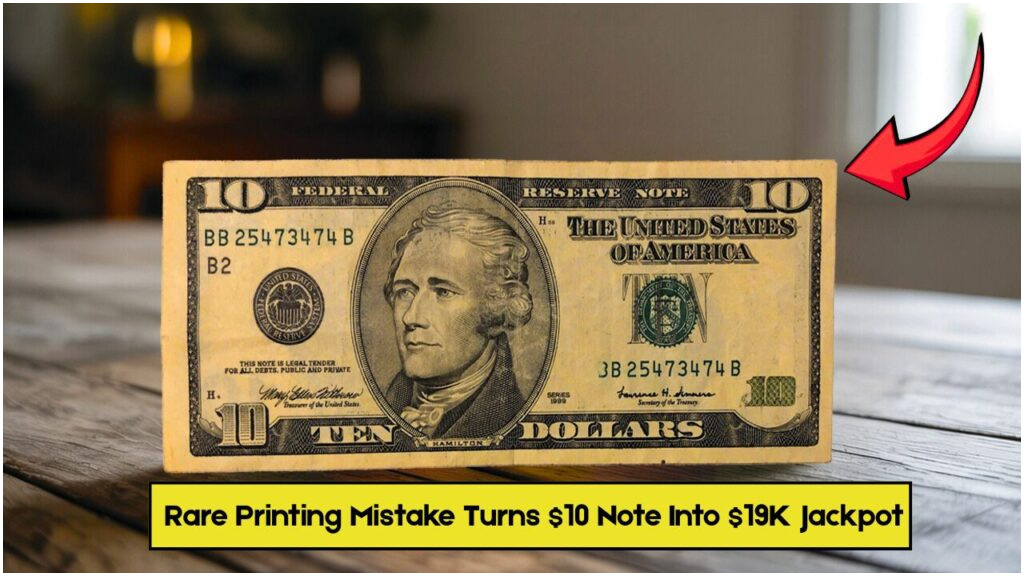
$10 Bill – In the world of rare currency collecting, unexpected printing errors can turn ordinary bills into extraordinary treasures. One such bill — a simple $10 note — has recently stunned collectors and investors alike by fetching an astonishing $19,500 due to a bizarre ‘Ghost Face’ printing error. Yes, you read that right! A ten-dollar bill, the kind you may have in your pocket right now, is making headlines and breaking records. So, what exactly is this ‘Ghost Face’ error, and why are collectors going crazy for it? Let’s dive deep into this mysterious bill that’s turned a regular currency note into a collector’s dream.
What Is a ‘Ghost Face’ Error on a Bill?
The term ‘Ghost Face’ refers to a printing anomaly where a faint, distorted, or duplicate version of the portrait (usually Alexander Hamilton on the $10 bill) appears elsewhere on the note — often out of alignment or in unexpected places. It’s believed to occur during the intaglio printing stage, where ink may get misaligned or transferred accidentally from improperly cleaned plates.
These errors are extremely rare and aren’t detectable by machines at the minting facility. Most go unnoticed by the public… until someone takes a closer look.
Imagine looking at a $10 bill and spotting a faint second Hamilton’s face floating like a ghost on the side — that’s the stuff collectors crave!
Why Is This Particular $10 Bill Worth $19,500?
A bill with the ‘Ghost Face’ anomaly recently sold through a private currency auction for $19,500. The reason for such a high valuation? Let’s break it down:
- Rarity: Ghost Face errors are not common. Fewer than 10 such $10 bills are known to exist in top condition.
- Condition: This note was graded as Gem Uncirculated 66 EPQ, meaning it was in pristine shape.
- Historical Appeal: It was part of the 2013 series, a year known for multiple minor minting issues, adding to its historical significance.
- Viral Attention: The bill’s photo went viral on TikTok and Reddit, creating a buzz in both casual and professional collecting circles.
Just like coins with double strikes or misprinted stamps, paper currency with such oddities often sees a massive increase in value due to a mix of curiosity, rarity, and demand.
Could You Have a Ghost Face Bill Too?
The good news is — yes, it’s possible! Many such error bills go unnoticed in circulation because most people don’t scrutinize their money. If you have older bills in a drawer, wallet, or family collection, it’s worth checking them closely.
Here’s what to look for:
How to Spot a Ghost Face Error:
- Hold the bill under a bright light and tilt it at different angles.
- Look closely around Hamilton’s face and other blank areas of the bill.
- Check for any faint double images or misaligned portrait outlines.
- Compare with a regular $10 bill to confirm anomalies.
- Look on both sides — sometimes the transfer bleeds to the back.
If you spot anything unusual, don’t spend it! Store it safely in a plastic currency sleeve and consult a currency expert or grading service.
Where to Sell or Verify Rare Currency Notes?
If you suspect you have a misprint or error bill like this:
Do This:
- Take clear high-resolution photos of both sides.
- Check similar listings on Heritage Auctions, eBay, or Stack’s Bowers.
- Submit it to a reputable grading agency like PCGS Currency or PMG (Paper Money Guaranty).
- Visit currency collectors’ forums for advice from experts.
Once authenticated, your bill could be worth hundreds or even thousands of dollars, depending on rarity and condition.
How Social Media Sparked a Currency Hunt
What made this particular Ghost Face $10 bill so viral was the power of TikTok and Instagram Reels. A collector posted a short video explaining the error, and it racked up over 5 million views in just 3 days. Since then, thousands of people across the U.S. have started going through their wallets and old bills.
This trend has led to a surge in demand for all types of error currency — from mismatched serial numbers to double prints, inverted seals, and of course, ghosted portraits.
Other Rare Error Bills That Sold Big
While the $10 Ghost Face is a current hot topic, here are other bills that fetched sky-high prices:
| Year | Denomination | Error Type | Sold Price |
|---|---|---|---|
| 1995 | $1 | Inverted serial numbers | $12,000 |
| 2006 | $20 | Misaligned seal | $9,800 |
| 2013 | $5 | Double face print | $7,200 |
| 2017 | $10 | Ghost Face Error | $19,500 |
| 1988 | $100 | Blank back | $14,000 |
These errors remind us that even in a world of mass production, tiny mistakes can become incredibly valuable.
In a time when most people use digital payments and hardly look at physical currency, this $10 Ghost Face bill is a perfect reminder to always check your cash before spending it. That crumpled note in your jeans or old shoebox might just be hiding a rare and valuable error.
Whether you’re a seasoned numismatist or a curious beginner, it pays (literally!) to keep an eye out for the unusual. And who knows? The next viral currency sensation might just be hiding in your wallet.
5 Most Asked FAQs About the $10 Ghost Face Error Bill
Q1. What is a ‘Ghost Face’ on currency?
A rare printing error where a faint or second image of the face appears unintentionally on the bill.
Q2. Are Ghost Face bills still legal tender?
Yes, they are still valid as currency, but their collectible value is often much higher.
Q3. How do I know if my bill is worth anything?
Look for visible errors, check serial numbers, and get it appraised by a currency grading service.
Q4. Where can I sell rare error bills?
You can sell them on platforms like eBay, Heritage Auctions, or through collectors’ networks.
Q5. Can new bills still have printing errors today?
Yes! While rare, modern bills can still have errors due to machinery faults or human oversight.