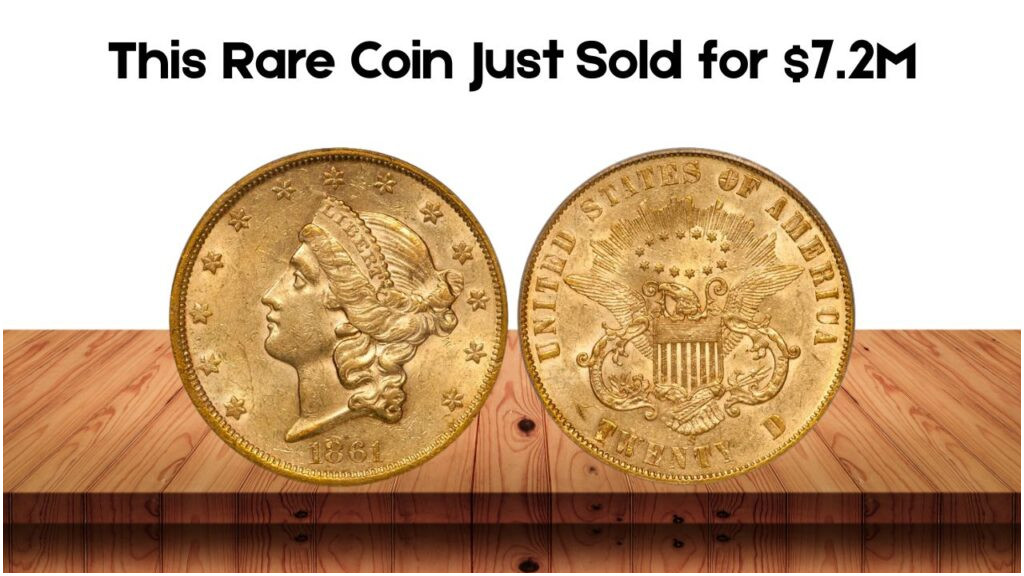
1861 Paquet Reverse Double Eagle – In the dazzling world of rare coins and numismatic treasures, few stories have captured the imagination of collectors and historians quite like the recent sale of the elusive 1861 Paquet Reverse Double Eagle. Sold for a jaw-dropping $7.2 million at a high-profile auction, this historic coin has once again stirred the world of numismatics — and raised hopes that more such hidden gems may still be waiting to be discovered.
The History Behind the 1861 Paquet Reverse Double Eagle
To understand the excitement surrounding this coin, one must delve into the dramatic backdrop of the American Civil War. The year was 1861 — the nation stood at the edge of division, and the U.S. Mint was adapting to design changes and production challenges. It was during this period that Anthony C. Paquet, an assistant engraver at the U.S. Mint, modified the reverse design of the $20 gold “Double Eagle” coin.
The Paquet Reverse featured taller, narrower lettering and a refined aesthetic intended to improve die longevity and reduce breakage. However, just days after minting began, the design was abruptly withdrawn due to technical issues — the Paquet dies reportedly cracked too easily during striking. As a result, very few of these coins ever saw circulation.
Why This Coin Is So Incredibly Rare
The Paquet Reverse was only minted in two locations: the Philadelphia and San Francisco Mints. While thousands were struck in San Francisco (though most were eventually melted down), only two confirmed specimens from Philadelphia are known to exist today — making them among the rarest and most valuable coins in American history.
The recent sale was of one of these two Philadelphia-struck coins, which are distinguishable by their finer detail and historical provenance. The coin was described as being in near-mint condition, with deep luster and remarkable definition despite its age. With its origin, rarity, and remarkable backstory, the coin is considered a crown jewel in any collection.
The Auction That Shocked the World
The sale took place at a prestigious numismatic auction hosted by Heritage Auctions in August 2025. Bidding started at $4 million and escalated rapidly, finally closing at an astounding $7.2 million — a figure that shattered previous records for coins of its kind.
The identity of the winning bidder has not been disclosed, but experts believe it was a private collector with deep ties to historic American artifacts. The auctioneers confirmed that the coin was graded by the Professional Coin Grading Service (PCGS) as AU-58, a top-tier grade considering its age and limited minting.
Could More Be Out There?
The burning question on every collector’s mind: Are there more Paquet Reverse Double Eagles still hidden in collections, safes, or forgotten chests across the country?
It’s possible — though unlikely. Given that so few were minted and most were either melted or recalled, the chances are slim. Yet numismatic history is filled with examples of coins resurfacing after decades — or even centuries — in private hands or estate sales. The Paquet Reverse’s relative obscurity and similarity to other Double Eagles may have allowed a few coins to escape detection.
Professional coin hunters are now urging collectors to double-check any 1861 Double Eagles in their possession. By paying attention to the subtle design differences in the lettering and spacing on the reverse side, even casual hobbyists might stumble upon a fortune.
What Makes This Coin So Valuable?
Several factors combined to drive the 1861 Paquet Reverse’s value sky-high:
- Extreme rarity: Only two Philadelphia specimens are known.
- Historical significance: Minted at the dawn of the Civil War.
- Unique design: Paquet’s brief contribution to coin design history.
- Condition: The auctioned coin was nearly uncirculated.
- Collector demand: Intense bidding wars for iconic numismatic pieces.
As one industry expert noted, “This isn’t just a coin. It’s a piece of American history preserved in gold.”
What It Means for the Coin Market
This historic sale has reignited interest in early American coins, especially gold Double Eagles. Dealers and auction houses are reporting a spike in appraisal requests and coin submissions for authentication.
Moreover, the coin’s performance sets a new benchmark for rare U.S. gold coins, potentially increasing the value of other Civil War-era numismatics. For seasoned collectors, this is a moment of both celebration and renewed vigilance — and for newcomers, a thrilling reminder that hidden treasures may still lie in wait.
The $7.2 million sale of the 1861 Paquet Reverse Double Eagle is more than a headline — it’s a testament to the enduring power of history, rarity, and craftsmanship. In a world of digital assets and fleeting trends, tangible relics like this coin remind us of the stories etched in metal and time. Whether another Paquet Reverse emerges or not, this sale marks a golden chapter in American numismatic history — one that will be studied, envied, and admired for generations to come.
FAQs of 1861 Paquet Reverse Double Eagle
Q1: What is the 1861 Paquet Reverse Double Eagle?
A1: It’s a rare $20 gold coin designed by Anthony C. Paquet with a modified reverse, minted briefly in 1861.
Q2: Why is this coin worth $7.2 million?
A2: Its extreme rarity, historical context, unique design, and near-mint condition drove up its value.
Q3: How many of these coins exist today?
A3: Only two confirmed Philadelphia-minted Paquet Reverse coins are known to exist.
Q4: Can more Paquet Reverse coins still be found?
A4: It’s unlikely but possible. Some may be hidden in private collections or old estates.
Q5: How can I tell if I have a Paquet Reverse coin?
A5: Look for taller, narrower letters on the reverse and consult a professional grading service for confirmation.
What makes the 1861 Paquet Reverse Double Eagle Gold Coin so valuable?
Its rarity and historical significance drive its high value in the market.
How much did the rare 1861 Paquet Reverse Double Eagle Gold Coin sell for?
It sold for $7.2 million.
Are there other variations of the 1861 Paquet Reverse Double Eagle Gold Coin?
Yes, more could still exist.