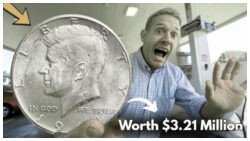
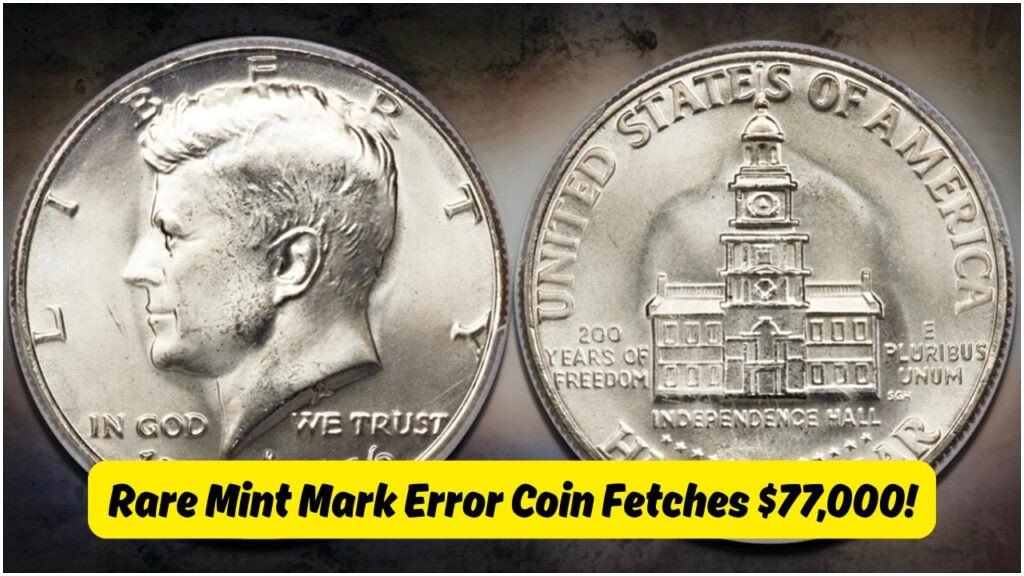
Bicentennial Half Dollar – A rare error coin has taken the numismatic world by storm. A Bicentennial Half Dollar, missing its mint mark, was recently sold at auction for a staggering $77,000. This unexpected windfall has sparked massive interest among collectors, investors, and even casual coin holders who may now be wondering if they possess a hidden treasure in their pocket change. This article dives deep into what makes this coin so valuable, how mint mark errors happen, and what to look for if you want to spot a rare coin like this one.
What Is the Bicentennial Half Dollar?
Introduced in 1975 to celebrate America’s 200th year of independence, the Bicentennial Half Dollar features unique reverse designs and carries a dual date “1776-1976.” These coins were part of a special issue that also included the Bicentennial Quarter and Dollar.
Key Features:
- Obverse: Portrait of President John F. Kennedy
- Reverse: Independence Hall in Philadelphia
- Dual-date: 1776–1976 instead of the typical single year
- Minted in copper-nickel and 40% silver varieties
- Mint Marks: Commonly “D” for Denver or “S” for San Francisco (on proof versions), and “No Mint Mark” for Philadelphia
However, a Philadelphia mint mark was standard in some years—but for this series, a missing mint mark when it should be there indicates an error, not normal production.
Why Is a Missing Mint Mark So Valuable?
A missing mint mark error means something went wrong during the production process. Normally, coins are struck with dies bearing the appropriate mint mark. If a mint mark is missing, it’s either:
- A rare minting error, which makes the coin unique
- A die preparation oversight where the mint mark was never added
- An accidental use of an unmarked die at a facility that normally uses a mint mark
In this case, the missing mint mark on a Bicentennial Half Dollar is extremely rare—especially when verified to be genuine by third-party grading services.
Factors That Drive Its Value:
- Rarity: Very few known examples
- Condition: Graded as MS-68 (near-perfect condition)
- Demand: Collectors love rare U.S. coinage with historical value
- Authenticity: Confirmed by PCGS (Professional Coin Grading Service)
Auction Highlights: How the $77,000 Sale Happened
The record-breaking sale took place at a high-profile numismatic auction in July 2025. The auction house, Heritage Auctions, described the coin as one of the finest known examples of this specific mint error.
Auction Details Table:
| Item Sold | Value | Grade | Authentication | Auction House | Date |
|---|---|---|---|---|---|
| Bicentennial Half Dollar | $77,000 | MS-68 | PCGS Certified | Heritage Auctions | July 2025 |
| Missing Mint Mark | Yes | Yes | |||
| Number of Bids | 39 |
The coin quickly gained attention across collector forums, news sites, and social media, becoming a symbol of how a simple error can lead to an incredible payday.
What to Look for in Your Own Coins
Don’t rush to spend your change just yet! If you have old Bicentennial coins lying around, it might be worth taking a closer look.
Checklist for Identifying Valuable Errors:
- Dual-date: “1776–1976” present?
- Mint mark location: Below Kennedy’s neck on the obverse
- Missing mint mark: No “D” or “S” visible when one should be
- Coin condition: Uncirculated or lightly circulated increases value
- Get the coin verified: PCGS or NGC certification is key
Similar High-Value Error Coins
This isn’t the first time a mint error has fetched a huge sum. Over the years, several coins with misprints or missing features have sold for thousands.
Comparison Table of Notable Sales:
| Coin Type | Error Type | Sale Price | Year Sold |
|---|---|---|---|
| 1955 Lincoln Double Die | Misaligned Letters | $24,000 | 2023 |
| 2004 Wisconsin Quarter | Extra Leaf Error | $6,000 | 2024 |
| 2007 Presidential Dollar | Missing Edge Lettering | $14,000 | 2021 |
| Bicentennial Half Dollar | Missing Mint Mark | $77,000 | 2025 |
These examples prove that mint errors are not only collectible—they’re potentially life-changing.
How to Sell or Verify a Rare Coin
If you believe you have a rare coin, the next steps are crucial to avoid getting scammed or undervaluing your find.
Steps to Take:
- Do Not Clean the Coin – Cleaning reduces numismatic value
- Photograph It Clearly – For initial verification by collectors or dealers
- Visit a Certified Coin Dealer – Preferably one registered with ANA (American Numismatic Association)
- Submit to Grading Services – PCGS or NGC are the most trusted
- Consider Auction – Use reputable houses like Heritage or Stack’s Bowers
The $77,000 sale of a Bicentennial Half Dollar with a missing mint mark reminds us how small details can make a big difference in the world of collectibles. Whether you’re a seasoned numismatist or someone curious about the coins in your drawer, it’s worth staying informed and checking for rare errors. Who knows? You might be holding a small fortune in your palm.
FAQs
Q1. Where is the mint mark located on a Bicentennial Half Dollar?
A1. It’s located just below Kennedy’s neck on the obverse (front) of the coin.
Q2. Are all Bicentennial Half Dollars without mint marks valuable?
A2. No, only those that are missing a mint mark due to an error, especially from Denver or San Francisco, are rare and valuable.
Q3. How do I get my coin authenticated?
A3. You can submit it to professional grading services like PCGS or NGC for verification.
Q4. Can cleaning my coin increase its value?
A4. No, cleaning usually reduces the coin’s value significantly—always leave it in its natural condition.
Q5. Is it legal to sell rare U.S. coins at auction?
A5. Yes, it’s completely legal, and many rare coins are sold through certified auction houses each year.
What makes the Bicentennial Half Dollar with a missing mint mark valuable?
Rarity and numismatic interest drive its high auction price.
How much did the Bicentennial Half Dollar without a mint mark sell for?
$77,000 at auction.
What was the previous record sale price for a Bicentennial Half Dollar without a mint mark?
$70,000
How rare are Bicentennial Half Dollars with missing mint marks?
They are highly sought after by collectors due to scarcity.
Who were the key figures involved in the $77,000 auction sale?
Collectors, auction house, numismatic experts.
What factors contribute to the value of a Bicentennial Half Dollar missing a mint mark?
Rarity, condition, and demand influence the value of such coins.
How does the missing mint mark affect the Bicentennial Half Dollar's value?
It increases the coin's rarity and desirability among collectors.
How did the missing mint mark impact the Bicentennial Half Dollar's value?
Rarity increased its value significantly.
What was the condition of the Bicentennial Half Dollar with a missing mint mark?
The coin was in excellent condition, contributing to its high value.
What was the previous highest sale price for a Bicentennial Half Dollar without a mint mark?
The previous record sale price for a Bicentennial Half Dollar was $50,000.
How does a missing mint mark impact a Bicentennial Half Dollar's value?
Missing mint marks can significantly increase a coin's rarity and value.
What factors make the Bicentennial Half Dollar with a missing mint mark valuable?
Rarity and collector demand drive its high auction price.
How does a missing mint mark affect a Bicentennial Half Dollar's rarity?
It enhances rarity and collector demand, increasing its value.
What was the starting bid for the Bicentennial Half Dollar at auction?
The starting bid for the coin was $1.
How does the missing mint mark affect the Bicentennial Half Dollar's value?
The missing mint mark increases the coin's rarity and desirability.
What is the significance of the Bicentennial Half Dollar's missing mint mark?
Unusual minting error increases collector interest and value.
What was the previous owner's reaction to selling the Bicentennial Half Dollar?
Overjoyed with the $77,000 auction sale.
What led to the high auction price for the Bicentennial Half Dollar?
Rarity due to missing mint mark.
How does the missing mint mark affect the Bicentennial Half Dollar's rarity?
The missing mint mark increases the Bicentennial Half Dollar's rarity.
How did the missing mint mark on the Bicentennial Half Dollar enhance its value?
Rarity and numismatic interest drove the price up at auction.
What makes a Bicentennial Half Dollar with a missing mint mark valuable?
Its rarity and unique error increase its numismatic worth.
What led to the high auction price of the Bicentennial Half Dollar?
Rarity due to missing mint mark increased its value significantly.
What was the significance of the missing mint mark on the Bicentennial Half Dollar?
Increased rarity and value due to minting error.
How did the missing mint mark affect the Bicentennial Half Dollar's numismatic appeal?
The absence increased its desirability and value among collectors.
How did the missing mint mark impact the Bicentennial Half Dollar's desirability?
The rarity increased its desirability among collectors, leading to a high value.
What factors determine the value of a Bicentennial Half Dollar with a missing mint mark?
Rarity, condition, demand, and historical significance influence its value.
How does the missing mint mark affect the Bicentennial Half Dollar's historical significance?
The missing mint mark adds intrigue and uniqueness to its historical narrative.